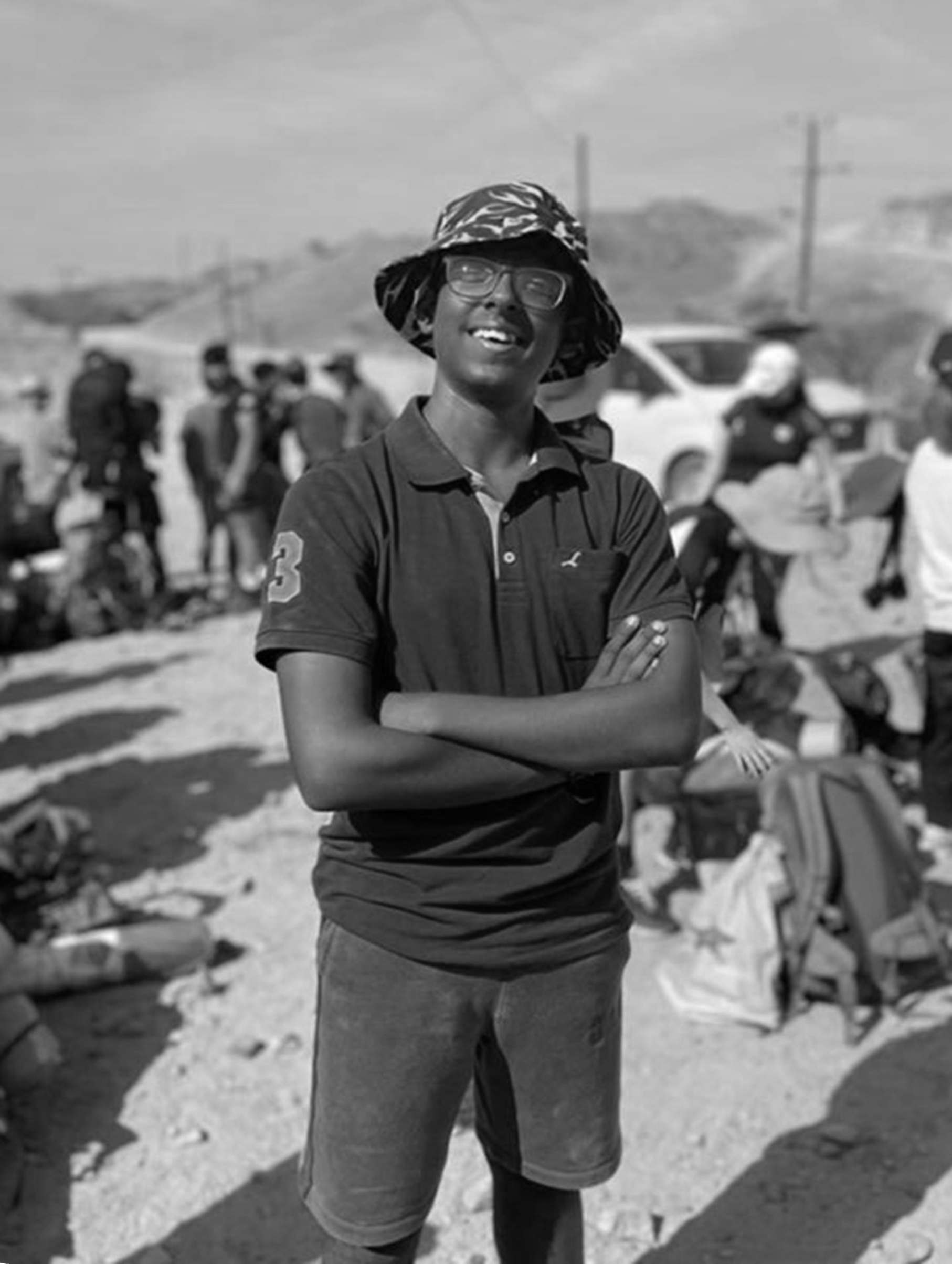
Aritro Chatterjee
Sophomore @ Dubai College
Applied Mathematics
Environmental Science
Social Entreprenurship
Other testing
random text like psychological disorders are not static: they change over time, whether transitioning between healthy states and disordered states (e.g., from a healthy state to suicidal ideation) or transitioning within disordered states (e.g., from depression to mania). An overarching theme to my work is developing statistical tools to best model EMA data in a clinical setting. EMA data is typically measured multiple times a day over several days in the participant’s natural environment, and my interest lies in its promise in capturing the minutiae of the dynamics of psychological disorders and in the heterogeneity in data types, ranging from numerical to categorical to qualitative and textual. My main aim is to assess and develop new statistical methods and software for the analysis of EMA data that are practically applicable in the clinical context. This is evident in my research areas of specialization.
Preprint
Slipetz, L.R., Eberle, J., Levinson, C.A., Falk, A., Cusack, C., Henry, T.R. “Analyzing Ecological Momentary Assessment Data With State-Space Models: Considerations and Recommendations.”
Network Psychometrics
My interest in network psychometrics stems from its ability to capture dependencies among symptom variables and the emergent properties and topological structure that arise from these relations across time, potentially resulting in better diagnoses and treatments of mental disorders. Here my work focuses not only on clinical application, but, also, creating and testing methods with the goal of investigating the scope and limits of network methodology.
Under Review
Levinson, C. A, Slipetz, L.R., Henry, T.R., Pennesi, JL., Crumby, E. “What Makes Personalized Treatment Work? Mechanisms of Change in Transdiagnostic Network-Informed Personalized Treatment for Eating Disorders.” (Submitted to Journal of Counseling and Clinical Psychology)
Dynamical Systems
Much of my interest in dynamical systems comes from the context of state-space modeling, a general modeling framework with a broad reach and well-suited to handling the complexities of EMA studies, including missingness, time trends, and non-stationarity. A goal in this arena is to develop state-space modeling methods and software that can handle the heterogeneity of data types inherent in EMA and apply them to clinical problems. My dissertation seeks an early warning signs model for the development of psychosis in schizophrenia spectrum disorders, formalizing the psychological phenomena that precede a phase transition into psychosis.
R package
Falk, A., Slipetz, L.R.,, Henry, T.R. (2023). netlabUVA/genss: genss v0.1.0 - Initial Prerelease (v0.1.0). Zenodo.https://doi.org/10.5281/zenodo.7887019
Under Review
Slipetz, L.R., Falk, A., Henry, T.R. “Missing Data in Discrete Time State-Space Modeling of Ecological Momentary Assessment Data: A Monte-Carlo Study of Imputation Methods.” (Submitted to Multivariate Behavioral Research). Henry, T.R., Slipetz, L.R. , Falk, A., Qiu, J., Chen, M. “Ordinal Outcome State-Space Models for Intensive Longitudinal Data.” (Submitted to Psychometrika).
Dissertation
Slipetz, L.R. (2026). “Formal models to detect early warning signs in prodromal psychosis: A complex systems simulation study”
Generative AI and Large Language Models (LLMs)
Within the heterogeneity of EMA data, there can be textual entries collected. In the world of computer science, some would have us believe that the best way to analyze these texts is through Generative AI and LLMs. My interest here is in exploring the promise of developments in computer science within the context of clinical psychology: how do we best apply Generative AI and LLMs in psychopathological EMA studies?